Drachenfels Warhammer Pdf Rule
See also: Throughout the of, the term 'Old Ones' is employed in various contexts. His first mention of the Old Ones appears in ' (1926), where he uses the term in reference to a group of primordial beings entombed in the mythical city of. At one point in the story, Inspector John Legrasse of the New Orleans police department raids a cult ritual gathering, capturing several of its members: They worshipped, so they said, the Great Old Ones who lived ages before there were any men, and who came to the young world out of the sky. Those Old Ones were gone now, inside the earth and under the sea; but their dead bodies had told their secrets in dreams to the first men, who formed a cult which had never died. Lovecraft also mentioned the Old Ones in ' (1929), naming them as mysterious entities associated with the Outer God. In (1936), the Old Ones had the power to keep the in check. In Lovecraft's revision story ' (1940), the denizens of are referred to as 'Old Ones'.
In Lovecraft's novella (1936), 'Old Ones' was another name for a species, the. These creatures were said to have built cities around the world in ancient times, but were eventually relegated to. At the end of their reign, they were all but destroyed by the, a slave race of their own creation. August Derleth [ ]. This section does not any. Unsourced material may be challenged and.
(October 2012) () ’s reinterpretations transformed the beings of Lovecraft's fictional mythology. Perhaps most importantly he introduced a good-versus-evil dichotomy between the Elder Gods and the Great Old Ones. More recently, however, scholars have come to accept that Derleth’s most fundamental innovation was the assignment of these beings to a single mythological pantheon as part of the overarching. One of the categories of this pantheon – the 'Old Ones' or 'Great Old Ones' – has become a standard in analyzing Lovecraft’s fiction. Other published fiction [ ] The Dark Is Rising [ ] In (1965–1977), a series of novels by British author, the Old Ones are agents of the Light, born as men and women, whose task is to prevent the Powers of the Dark from taking control of the world. They are immortal but are not gods and most do not appear different than middle-aged humans.
Their abilities include time-travel, shape-shifting, and ability to speak and understand various languages without having learned them. Most of their powers are designed to allow them to fulfill their goal of combat against the forces of the Dark and are activated upon reading The Book of Gramarye. Their full abilities are never detailed and they are often the protagonists in the series and serve as a balancing force to the Lords of the Dark who have similar powers. The Dark Tower [ ] In series (1982–2012) written by, the 'Old Ones' (sometimes also called 'Great Old Ones') were a highly advanced civilization known as the Imperium that ruled many centuries before the events detailed in the story.
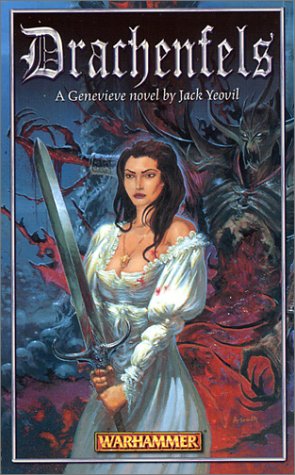
Oct 26, 2017. A character and subject of book written in the ye olde days of WHFB, by Jack Yeovil, more widely known as the film critic/horror buff Kim Newman. Imagine if you mixed the classic mustache and goatee twirling depiction of Satan in a business suit with Dracula, and threw him in the Warhammer Fantasy. Warhammer: End Times - Vermintide Collector's Edition. Also available at..This bibliography of Warhammer Fantasy Roleplay publications is a list of all officially published products. FP0036 Castle Drachenfels. (PDF download,.Drachenfels Warhammer Pdf Rule.. The Enemy Within 3 - Death on the Reik - Download as.
They were obsessed with technological development and saw their inventions as a solution to every challenge, replacing the immortal, magical essence of creation with mortal machinery. The Imperium harnessed the magic of the Dark Tower, using it to travel to other worlds and historical eras so that they could revel in destruction and death. In their hubris, the Old Ones sought to rule the entire, but in order to do this, they first had to destroy and then rebuild the Dark Tower. However, their attempt brought about a great catastrophe that spurred them to wage war against each other. The ancients managed to destroy themselves in one final battle, leaving Mid-world a radioactive wasteland. Technological relics of the Old Ones' era can still be found scattered throughout the land.

In the original version of the first Dark Tower novel,, it was implied that the world of the Dark Tower series is a decayed future version of present-day Earth, thus the Great Old Ones are a future stage in the development of contemporary civilization. However, as the series evolved, it was revealed that All-World (the world inhabited by main character ) and Earth (or, more specifically, ) are, or different 'levels' of the Dark Tower, rather than a single world at different points along its history.
The Dresden Files [ ] In series of novels (2000–present) by, the Old Ones are or dark gods who once ruled the world before mankind. They were apparently banished from our reality. The Seventh Law of Magic prohibits the summoning of both the Old Ones and their minions the Walkers, or Outsiders. The Vampire Chronicles [ ] In series of novels (1976–2003) by, characters Akasha and Enkil, progenitors of the race – who appear in (1985) and (1988) – are referred to both as ' and 'The Old Ones'. Within this series, the term 'Old Ones' is also used to describe several other obscure, centuries-old vampires who are much stronger and more powerful than the younger, recently made vampires.
The Power of Five [ ] are a series of five novels (2005-2013) by in which 'the old ones' refers to a vague collection of demons (including half human and half animal mash-ups) attempting to cross over through several 'Gates' to enslave and torture the entire human race. In the series, the Old Ones ruled Earth ten thousand years ago and suppressed numerous human rebellions before finally being banished into another dimension by the Gatekeepers, who are later reincarnated into modern teenagers in order to stop the Old Ones when their prison is unlocked. The series has many similarities to 's Cthulhu Mythos such as the old ones needing to play upon the avarice of a human organisation to be released into the world.
The Americana Mythos [ ] The Americana Mythos is a series of novels and short stories (2016-present) by Connor Grant. The old ones are referenced indirectly in Years of The Worm (2016) and more overtly in Eden Parish (2017). The series also introduces several new Old Ones, such as 'Ythath, The Worm of the Woods', and 'The Father'.
Role-playing games [ ] Dungeons & Dragons [ ] The reference book (1980) included a section on the Cthulhu Mythos and provided for the Old Ones and their various minions for optional use in player. Published this material under the assumption that it was in the public domain, but, claiming to hold the copyright, had already licensed it to for their series.
To stay the threat of legal action, TSR issued a second printing that credited Chaosium for granting them permission to use the material, but removed the content altogether from subsequent editions. Among in, the term 'Old Ones' is applied to legendary beings possessing infinite power and lifespans who are thought to have created the.
Their true abilities and goals remain strictly the province of rumor and speculation since no real evidence has been found either to confirm or disprove their existence. The Old Ones have established a barrier called the Vortex Dimension between the higher planes wherein they reside and the rest of known reality which they fashioned as an experiment to determine if other beings can evolve and produce a new generation of 'Old Ones'. In the, members of the vremyonni, a secretive brotherhood of ancient in the nation of, are commonly referred to as 'Old Ones'. All male Rashemi children who display magical aptitude are removed from their homes and sent to live with the vremyonni where they receive training in sorcery; there they must remain or else face permanent exile from their homeland. Both loyal to and respected by the witches who rule Rashemen, the vremyonni spend their unnaturally long lives engaged in arcane research and experimental spellcraft.
Palladium Fantasy [ ]. Main article: The race of known as the in the (1984), created by and published by, are regarded as the most ancient and powerful beings in the Megaverse. Their presence and influence figure prominently in the Palladium Fantasy setting, but they also receive occasional mention in other role-playing game series from Palladium. Described as 'the masters, if not the very source of ' who appear as 'hideous, oozing slimes and gelatinous mounds of flesh and tentacles', they are each the embodiment of a particular aspect of evil and subsist upon the respective brands of suffering they inflict. After being overthrown and defeated through the combined efforts of under their rule, the Old Ones were placed into an enchanted slumber and hidden away in hopes that they will neither reawaken nor escape.
Warhammer [ ] Within 's fantasy and science fiction settings there is reference to the Old Ones; these are implied to be the same creatures, though they have been presented in slightly different ways. Warhammer 40,000.
Main article: In the of, the Old Ones traveled through space manipulating minor species on several planets and growing them into tools for their battle against the. The were probably their servants. Although a reference in the novel (2000) might indicate that the Old Ones could be the Eldar, all other instances that refer to both the Eldar and the Old Ones make clear that the two are separate races, the Eldar always being less powerful than — and usually servants and/or creations of — the Old Ones. Warhammer Fantasy Though less prevalent, the Old Ones also appeared in the background material for the setting.
The Slann are the ruling caste of the. Before the Lizardmen Army book was released, the race now known as the Old Ones were called the Slann (primarily referenced in the rulebook); after the book was released, they were renamed the Old Ones allowing the name 'Slann' to be assigned to the mage-priests of the Lizardmen. No current allusions are made as to the physical appearance of the Old Ones, although it is assumed they were bipedal, as was the race that served them (the Slann, who in turn presided over the Saurus and Skinks: the Saurus being the warriors, the Skinks being in charge of work requiring more finesse). Some materials ( Drachenfels) referred to them as the 'toad men' from the stars. The Old Ones were the ones who set up the warp gates at either pole of the planet and shifted it into a more favorable orbit before encouraging the development of the native species.
In older versions of the material, the Old Ones were known as the Old Slaan and were ancestors of said race, who at that time were far more humanoid (a race of psychic frog-men). Television [ ] Babylon 5 [ ] In the television series (1993–1998), a group of ancient races known collectively as the ' appear during the course of the show. According to the show's lore, these powerful entities were the first civilizations to form in the galaxy. Buffy the Vampire Slayer [ ]. Main article: In the fictional ' established by television series (1997–2003) and (1999–2004), both created by, the 'Old Ones' are powerful pure-breed demons that once dominated Earth before humankind appeared and during its earliest years. In the first-season episode ', Watcher tells: This world is older than any of you know. Contrary to popular mythology, it did not begin as a paradise.
For untold eons demons walked the Earth. They made it their home, their. But in time, they lost their purchase on this reality.
The way was made for mortal animals, for man. All that remains of the Old Ones are vestiges, certain magicks, certain creatures. Supernatural [ ] The Old Ones are referenced in the (2011–2012) of, where they are primarily called '. [ ] They were among the first of God's creations but were locked in as they were powerful enough to destroy all Creation. When Purgatory was accidentally breached and the angel absorbed all the souls inside, the Leviathans entered him too, steadily destroying his body and physically trying to rip their way out of him. Being Human [ ] In (UK), the Old Ones are a group of vampires of varying ages.
They are introduced with in series 2, and, a member of the series 4-5 trio, is an Old One. 's main plot revolves around the Old Ones trying to take over the world.
The vampire world takes great effort to prepare for them, including rituals, plan, even such things as red carpets. The Old Ones are unaffected by religious symbols. Is an Old One and also one of the first vampires, whose blood can be found in every vampire. Video games [ ] Age of Mythology [ ] An to the computer game (2002) from introduces the titan, who is referred to as the 'Old One', as the game's primary antagonist. Bloodborne [ ] In ' (2015) by and, the game references celestial beings known as '.
One in particular, Ebrietas, is known as 'The Daughter of the Cosmos'. Darksiders [ ] In (2010) and its (2012) from, the term 'Old Ones' refers to all beings predating the appearance of angels, demons, and humans, among which are included the Makers who are responsible for creating many worlds and realms, including even the creation of Heaven's Ivory cities. Demon's Souls [ ] In (2009) by and, the 'Old One' is a powerful entity taking the form of a massive hovering construct of wood, rock, and soil who is accidentally awakened and seizes control of the kingdom of Boletaria with an army of soul-devouring demons. The Old One and its demons are the source of both magic and miracles, which are both considered Soul Arts. Dragon Age [ ] In the series (2009–present) from, the Archdemons are said to be 'Old Gods' who were buried underground by the Maker, where they became corrupted by the Darkspawn. Mass Effect [ ] In the video game series (2007–2012) from BioWare, the massive, intelligent plant-like being called the refers to itself as the 'Old Growth'. In addition, the called refers to the as the 'Old Machines', and claims that the geth who have attacked organics believe the Reapers to be gods.
Neverwinter Nights [ ] Taking place in the Forgotten Realms setting of Dungeons & Dragons, the story of (2002) revolves around the 'Old Ones', an otherwise unnamed ' of extremely powerful, cruel, reptilian humanoids who had enslaved the 'warm blooded' races in ages past. Believed to be extinct, their queen attempts to resurrect them and re-establish their dominance over. StarCraft [ ] In 's universe of (1998–2010), the are beings who are said to have been responsible for creating all of the sentient races in the universe and nurturing their civilizations. Although this includes the Terrans (humans), only the Zerg and Protoss had ever come into contact with them. The Xel'Naga are beings of supposedly unsurpassed wisdom and power, though it has been noted that the Zerg became uncontrollable for them and decimated their fleets. World of Warcraft [ ] In the (2004–present) from Blizzard Entertainment, there are beings known as the Old Gods, malevolent entities that ruled the world of Azeroth in ancient times.
The Old Gods were defeated by the Titans and buried deep underground. They still live, and their influence occasionally spills out onto the surface. Some of the Old Gods' names bear close similarity to those of Lovecraftian beings, such as C'Thun (Cthulhu) and Yogg-Saron (Yog-Sothoth). Other appearances [ ] • A group of called the 'Old Ones' are mentioned by the main character in 's (1961). • Old Ones appear in the (1962–1986), 's series of science fantasy books about the Murry family, notably in (1978). Similar to those found in Susan Cooper's The Dark Is Rising series, the Old Ones are humans born with unusual mystical powers and dedicated to a never-ending struggle against the powers of darkness and evil. In both series, the Old Ones are associated with an Old Music.
• In the first-season episode ' (1966) from the original television series, an ancient alien named Ruk (portrayed by ) refers to his long-deceased creators as 'The Old Ones'. • Lovecraftian-style Old Ones appear in as extradimensional beings who once ruled the Earth tens of thousands of years ago. They serve largely as back-story, the only one of note being the enemy who first appeared in 1972. • In the 1995 novel by, part of the (1992–1995), humans are referred to as the Old Ones by the two sentient, indigenous species of Earth.
• 's 1995 film, which is partly based on H. Lovecraft's The Shadow Over Innsmouth. • In the 2000 novel Shadow Scourge by, part of the series (1997–2011), the antagonist Ocajinik is suspected of being an Old One. • In the short story ' by – originally featured in the anthology (2003) and later appearing in his collection (2006) – the Great Old Ones have taken control of Earth's governments.
For instance, the Queen of England is described thus: 'She was called Victoria because she had beaten us in battle seven hundred years before, and she was called Gloriana, because she was glorious, and she was called the Queen, because the human mouth was not shaped to say her true name. She was huge—huger than I imagined possible— and she squatted in the shadows, staring at us without moving.' • In the 2006 novel by, fourth installment in series (2005–2010), the ' are beings of light who live in a cave under the sea. The Demonata hate but fear them.
They left Earth and ascended to the Heavens almost two thousand years ago when their time came to an end. • Old One, named after H. Lovecraft's fictional race of gods, is a band from; they released a single self-titled album in 2009. • There is a entitled 'The Old Ones' by Zander Nyrond, set to the tune of the 1962 pop song ', that was inspired by the Cthulhu Mythos. • Several of the novels and audio plays refer to entities known as the 'Great Old Ones'.
A number of Lovecraft's creations are mentioned by name, and some entities from the TV series have been identified as being Great Old Ones as well. See also [ ] • Notes [ ]. • Lovecraft 1928, p.
• Lovecraft 1929, p. • Lovecraft 1936 (March), p. • Lovecraft & Bishop, p.
• Lovecraft 1936 (April), p. • Ward & Kuntz, pp. • Allston, pp. • Mentzer, pp. • Baker, Forbeck & Reynolds, pp. 134, 135, 138, 140, 143.
• Siembieda, Long & Rosenstein, pp. • ^ Siembieda & Wujcik, pp. • Siembieda, p.
References [ ] • (August 1992)., ed. Wrath of the Immortals—Book One: Codex of the Immortals..:.. •; & (May 2003).
Dungeons & Dragons Campaign Accessory—Forgotten Realms: Unapproachable East..:.. The Born–Einstein Letters: Correspondence between Albert Einstein and Max and Hedwig Born from 1916 to 1955, with commentaries by Max Born.
Born, trans.:.. • (October 2003).. • (February 1928)., ed...: Popular Fiction Publishing. 11 (2): 159–178, 287. • Lovecraft, H. (April 1929). Wright, F, ed..
Chicago, IL: Popular Fiction Publishing. 13 (4): 481–508. • Lovecraft, H. (March 1936)., ed... New York City, NY:. 17 (1): 125–155. • Lovecraft, H.
(April 1936)..:.. • Lovecraft, H. & (November–December 1940). McIlwraith, D, ed.. Chicago, IL: Popular Fiction Publishing. 35 (6): 98–120. • (June 1986)., ed.
Dungeons & Dragons Fantasy Role-Playing Game—Immortals Rules: Dungeon Master's Guide to Immortals. Dungeons & Dragons Basic. Lake Geneva, WI: TSR.. • (June 1995).
Carter, M, ed. Forgotten Realms Campaign Expansion: Spellbound—Campaign Guide.. Lake Geneva, WI: TSR..
• (November 1984). The Palladium Role-Playing Game Book II: Old Ones.:.. • Siembieda, K.; & Rosenstein, J. Rifts World Book Four: Africa.: Palladium Books.. • Siembieda, K. & (June 1984).
The Palladium Role-Playing Game (Rev. Detroit, MI: Palladium Books..
• & (May 1980). Schick, L, ed. Deities & Demigods: Cyclopedia of Gods and Heroes from Myth and Legend.. Lake Geneva, WI: TSR.. External links [ ] • Archived from on May 24, 2011.
This Warhammer-related article describes a work or element of fiction in a primarily style. (October 2009) () The Undead of the Warhammer Fantasy Tabletop Wargame (Games Workshop ltd.), were introduced to the game in its very earliest editions. The term itself can refer either to the undivided and all-inclusive army—ranging from ghosts and vampires to skeletons and mummies—or to the separate components which make up the two: The Tomb Kings of Khemri, and the Vampire Counts. Up to and including the fifth edition of, the Undead represented the combined forces.
For the sixth edition, divided the Undead into two separate armies to represent the chaos which Nagash created when he cast his Spell of Awakening to begin his assault on the lands of the living. As in-game legend goes, Nagash was a priest in the courts of the land of Nehekara, and after learning Dark Magic from prisoner, developed his own twisted form of Magic which he termed. This magic gave him the power to command the dead, and ultimately he cast a powerful spell from his tower, with the intent of raising all the dead of Nehekhara, thus creating a titanic army of mindless Undead. The recent dead joined with the enslaved Tomb Kings of ancient Khemri to begin their march to Nagash's tower.
They would not complete their journey, for Nagash was slain through the machinations of the Skaven and their pawn, the escaped captive King Alcadizaar. The ratmen, who had grown jealous of Nagash's hoard of, gave to Alcadizaar a sword which could cut down the mighty sorcerer: The Fellblade. While the act did not destroy Nagash, it banished him from the material world for more than 10 centuries, collapsing most of Undead horde that his sorcery had raised, and leaving the Vampires to pursue their own ends as his unwitting progeny. With Nagash's death, the Tomb Kings retained their unlife, but had regained their individual will.
Upon Nagash's first return from death, the Tomb Kings revolted against him, and swore vengeance upon his head and upon any of his followers. This is the reason that the two types of Undead exist—because of their loathing of Nagash and his evil magic the Tomb Kings have separated themselves from such atrocity. No necromancer is safe in the deserts of Araby or Nehekara, for the kings of old lie in wait to destroy all of Nagash's minions. Out of the two offshoot armies, the Vampire Counts have access to strong heroes and much of the troops from the old Undead, making it more of a successor to the formerly unified army. While the former unified Undead and succeeding Vampire Counts are inspired by in the setting of, the Tomb Kings are fashioned after and. The Undead factions remained separate until The End Times when the Vampire Counts and Tomb Kings were reunited into the Undead Legion under the resurgent Nagash.
Contents • • • • • • • • Distribution [ ] The undead can be found in many parts of the Old World, however there are areas where the dead simply cannot rest easily. Chief among these places would be Sylvania, the province of the Empire ruled by the Von Carstein Vampires. Also noteworthy would be the deserts of Araby and Nehekara, and of course Nagashizzar, the fortress of the Black Master, Nagash.
Development of the Undead in the Warhammer setting [ ] As described earlier, the origins of the Undead can ultimately be traced back to Nagash, the first Great Necromancer. The Tomb Kings and their legions were reanimated as a result of his attempts to raise a massive army of mindless corpses, and the Vampires arose because of the Elixir of Life, which Nagash had discovered could bestow everlasting life—for a price. Queen Neferata of the ancient city of Lahmia discovered this secret within Nagash's nine books, and so became the first vampire. Her progeny became known as the Lahmian vampires. Within the development of the Warhammer Fantasy battle game Nagash did not appear as a fully described character until 1994 with the release of the first Warhammer Armies: Undead book.
Before then the undead and a number of 'Undead Army' characters had been described but not with any great amount of background. The Legions of Undead [ ] Several staple character types are represented by the game of Warhammer, and several others besides those which are readily recognized and accepted. Among the undead, the following are included: • Necromancers: Men who have turned to the dark arts in a desperate attempt to preserve their own flesh beyond that which is normal. Though living themselves—even if only just—they are generally the masters of the undead, for it is their magic which binds the corpses to the material plane. • Liches: This is what becomes of a successful Necromancer.
The soul is bound to the body, so the sorcerer can not die a natural death, but can still be destroyed by a determined opponent. Liches resemble walking corpses, and many - such as Nagash himself - were mere animated skeletons wrapped in their vestments. •: These are long-dead kings and warriors of renown which have been raised by powerful necromantic magic.
Stronger than the typical skeleton warrior, Wights carry with them powerful weapons which are enchanted to bring death with the slightest scratch. It takes a necromancer of incredible power to bind such warriors. •: These are the spirit-fragments of women who are heralds of woe and death.
Their scream is the harbinger of death, and when people hear the banshee's wail, they tremble with fear. • Wraiths: If a necromancer does not achieve the level of mastery required to become a lich, this is what becomes of him. Wraiths are terrifying creatures who no longer possess a physical body, but whose fear of dispersing into oblivion within the Chaos Realm binds them to the physical realm, in a hollow existence of endless torment. •: Though not strictly undead, or even dead at all, ghouls are mortal cannibals, once human, who have been transformed by necromancy and reduced to grave-robbing and following in the wake of battle to feed their unnatural hunger for human flesh. They operate in packs, very much like ravening wolves.
They seem to have no humanity left to them whatsoever. •: There are few beings on the Warhammer world with as much power to themselves as a vampire. Many of them are centuries old. Some are older, and they continue to grow in power as they age. Blessed with a natural affinity for Nagash's Necromancy, they are very often found leading the undead into open war.
• Skeletons and Zombies: These are the mindless corpses of fallen warriors which have been animated by a necromancer to do the master's bidding. They have no conscious thought, and they are not adept fighters. Their only advantage is that they are not alive. Compellent Perpetual Software Licensing Model on this page. They do not feel pain, hunger, cold, heat, wind, rain, nothing. They simply continue on their crusade until their master decides otherwise.
Most all of the true undead cause 'fear' or 'terror' within the structure of the Warhammer Fantasy battle game and some can only be attacked by magical means. Another important factor within the game is that of 'instability'; being for the most part creatures animated by magical means they are dependent on the controlling sorcerer (the army general in Warhammer Fantasy Battle) and the flow of magic within the game. In some editions of the game this meant that the loss of the army general effectively led to the possibility of instant destruction of most of the undead units. Undead characters [ ]. See also: • Nagash Nagash is the first and greatest of all Necromancers and is known as the father of Necromancy. His power had no equals but the Ancient Slann of Lustria. His lair is, a region where the living fear to go.
Atp Emtp Software Download. Nagash was once human but due to his experiments with dark magic coupled with the effects of centuries of warpstone consumption, Nagash now stands well over 15 feet tall. His body is little more than bones covered with occasional mummified flesh, he carries the great sword Mortis, and wears armour fashioned by himself out of Meteoric Iron, called the Black Armour of Nagash. Nagash while still human was originally taught the basics of the Black Art from a captured Dark Elf warlock and his companion sorceresses (Malchior, Drutheira & Ashniel) who were marooned on the coastline of ancient Nehekhara.
From their knowledge Nagash combined dark magic with the ritual embalming magic of the priests of Khemri to create the blasphemous art of Necromancy. Nagash is infamous throughout the history of the Warhammer world, he caused widespread destruction and ruin wherever he and his armies marched. • Heinrich Kemmler, the Lichemaster One of the oldest undead characters in WFB, having been the subject of two scenarios for the earliest Editions of WFB: Terror of The Lichmaster (a boxed set for 2nd ed in 1986 complete with card buildings) and in an edition of the Citadel Journal in a three way fight with and warrior monks of Taal as his enemies (called 'The Battle for La Maisontaal'). There was also Lichemaster for (WFRP) in 1990 and a scenario for that returned to the theme of this battle of 'La Maisontaal'. More recently (White Dwarf 309) he appeared for later versions in Return of the Lichemaster. Kemmler was a master Necromancer, leading huge legions of the undead, with his own court of ambitious apprentices.
As they grew they became rivals and one day attacked their master. Kemmler fled them, nearly breaking his body and mind in the process. For years he wandered the World's Edge Mountains on the run, until he stumbled upon the tomb of Krell, a powerful champion of Chaos in life, and later returned to Undeath by Nagash himself to become a 'Dark Lord of Nagash'. Krell was defeated after Sigmar's banishing of his master and entombed in a secret location. There Kemmler struck a pact with the Chaos gods to restore his power in return for spreading death and destruction in their name.
They also granted him Krell as a gift—a powerful Wight Lord accomplice and bodyguard. Now the name of the Lichemaster once again strikes fear into the hearts of mortals, though with the shadowy hand of Nagash guiding them from behind the scenes. Anevent involving the two was the infamous battle at La Masiontaal Abbey where a Bretonnian monk stole a warpstone artifact from Skavenblight, home of the ratmen. Kemmler seeing the warpstone as potentially being very helpful in his own sorceries attacked the monk's home abbey at the same time as the Skaven did, seeking to take back their property. With the arrival of Bretonnian reinforcements the famous three-way battle ended with the Skaven taking their property back and Kemmler driven off by the knights of Bretonnia. The 'Winter of Woe', a campaign against the Wood Elves where Kemmler tried to harness the power of the ancient standing stones in their woodland home.
Attacking during winter, when the gods incarnate of the Wood Elves were in hibernation, gave the Necromancer great advantage over his living foes. Thanks to the assistance the famous treeman Durthu and other native spirits of the wood, the Necromancer was driven off, but not before causing serious damage to the forest. He returned to life later in history and a zombie horde led by him besieged castle Reikland only to be this time thwarted by the Dwarf Slayer Gotrek Gurnisson and his human companion Felix Jaegar. In The End Times, Kemmler is finally killed in a duel with Arkhan the Black after attempting to double cross Arkhan during the latter's plan to resurrect Nagash. • Krell A gift from the Chaos gods to Heinrich Kemmler, Krell was once a Chaos warrior, and now he serves the Lichemaster in a terrible mockery of life. More fearsome now than he was in life, Krell serves as Kemmler's bodyguard.
• Arkhan the Black The first general and most powerful pupil of Nagash. He was slain covering Nagash's retreat from the city of Khemri.
The beauty of Necromancy means though that he was brought back later by Nagash's foul craft. In The End Times, Nagash names Arkhan his Mortrarch of Sacrament. • Dieter Helsnicht, Doomlord of • - a vampire who appears in a number of novels by • vampires: • Vlad - Probably the most notable of the Von Carstein Counts, he was a very noble, but very cold man. He waited for hundreds of years for the perfect time to strike the Empire with a massive army of the Undead at his back, defeating the forces of the Empire one battle after another. When he marched on Altdorf, his victory seemed assured. The night before the battle, Empire operatives (aided by Vlad's treacherous 'son,' Mannfred) had managed to steal the Carstein ring, an artifact that had allowed Vlad to return from attacks that could kill even a Vampire. Vlad, in a rage, ordered his army to storm Altdorf, and took the Grand Theogonist on in single combat.
For most of the battle, victory seemed assured for Vlad and his army. The battle ended in an Empire victory when the Grand Theogonist threw himself into Vlad, dragging him from the battlements of Altdorf in a deathly embrace. The two were impaled on the moat of stakes which had been placed around the city, and without Vlad's necromancy, his army crumbled. It has been speculated that Vlad von Carstein is a pseudonym for Vashanesh, the consort of the first Vampire, Queen Neferata. Vlad himself has hinted both to the veracity and the falseness of this claim.
• Isabella - The devoted wife and lover of Vlad von Carstein, she was as noble as Vlad, but also crueler. She regarded the living with a level of contempt which her sire did not. After Vlad's death, she was captured and imprisoned in a temple. She denied Vlad's death, claiming that he would return to her. After some time she was convinced that he was truly dead, and ended her own life by stabbing herself with a stake. • Konrad - The second most powerful of Vlad's gets, Konrad greedily assumed the throne after Vlad died, as Mannfred, Vlad's firstborn, mysteriously vanished following the incident.
Konrad, in contrast to his sire, was one of the worst rulers in Sylvania's history, an impressive achievement considering the general brutality of Sylvania's nobles, both living and undead. He was given to a terrible temper as well. While he ruled at Drakenhof, there was a terrible waste of blood. The devoted servants of Sylvania, whom Vlad had treated well—indeed, they felt graced to be chosen as Vlad's meal—became little more than 'cattle' to the new count. At one point in his rule, Konrad ordered his mother bricked into her own room without sustenance for the crime of giving birth to him without Konrad's permission. He eventually became so paranoid that the other vampires would destroy him that they eventually were left with no choice but to prove him right.
He was killed at the battle of Grimm Moor, by a White Wolf of Middenheim whom Vlad had inducted into his inner circle. • Mannfred - Vlad's first get. Mannfred was actually first in line to take the place of Vlad, however he mysteriously disappeared after the Count's untimely death. For many years Konrad was allowed to rule Sylvania, but as it turns out, Manfred had not been idle. He had gone on a quest to retrieve some very powerful artefacts from the lands of the Tomb Kings. When he returned, nearly more than 100 years after Vlad's death, Manfred was equipped with one of Nagash's nine books, a powerfully enchanted staff, and a cloak which rendered him nearly impossible to hit in combat and a ring that could bring him back from any death.
It is this ring that allowed his sire Vlad to continue his war for so long. Additionally, he had become a very accomplished wizard, and this allowed him to do what Konrad could not—to march on the Empire without any fear of defeat. However, when Mannfred finally stood at the gates of Altdorf, as his sire had done so many years ago, yet another crushing defeat waited for him. All that was visible on the walls of the great city was the figure of Grand Theongist Kurt III.
The tiny man had open in his hands Nagash's Liber Mortis, and he began reciting the spell of unbinding from its pages. Rage took Mannfred, but as his army began to crumble to dust, he was in no position to continue the assault. He was driven back, and finally cut down at Hel Fenn by the White Wolf, the once grand master of the order of the white wolf then turned undead. He took the ring and with the help of a dwarf hid himself for all time in the badlands to keep the ring from returning to evil hands. • Constant Drachenfels, the Great Enchanter First appearing in the novel Drachenfels by and subsequently in Castle Drachenfels for WFRP Drachenfels is a magician who cheats death by taking over the mind and soul of one of those at the killing and subsequently uses them to kill the others who were there and taking body parts to complete the transformation but who is killed by an actor/playwright (Detlef Sierck invoking and using a war hammer) and Genevieive. • Neferata Queen of Lahmia and the founder of the Lahmian Sisterhood, a order of beautiful female vampires. She is also known as the Night Queen.
Her agents have infiltrated many of the other factions throughout the world. She seeks to unite all the disparate undead groups under her rule and to rebuild the Temple of Blood. Khalida of the Tomb Kings is her cousin.
Liber Necris [ ] Liber Necris, or Book of the Dead (from liber 'book' and nekros 'dead'), is a source of background material describing the different kinds of Undead creatures and concepts of that appear in the Warhammer Fantasy setting. Written and compiled by 'Marijan von Staufer', it was first published by, an imprint of 's publishing division, in June 2006. Liber Necris is a written in an entirely in-setting style, purportedly by, one of the as his own encyclopaedic description of his kind. There have been a number of books of the dead mentioned in the background material - the nine 'Books of Nagash', the 'Liber Mortis' of Vanhal - but none of these has ever appeared as more than passing references or small passages. Liber Necris was originally going to be written and released as Liber Mortis, from the narrative POV of Vanhal, but when D&D released a book the previous year called 'Libris Mortis' the decision was made by BL Publishing to change the name of their book to Liber Necris.
The Black Library. Archived from on 2007-02-02.
Retrieved 2007-01-11. References [ ] • Cavatore, Alessio; Tuomas Pirinen; Space McQuirk (2001). Vampire Counts. Games Workshop..
• Cavatore, Alessio; Anothony Reynolds; (2002). Games Workshop.. • Barson, Michelle (Editor) (2004).
The Undead Collectors Guide. Games Workshop.. CS1 maint: Extra text: authors list () •; (1994). Games Workshop.. • Pirinen, Tuomas; (1999). Vampire Counts. Games Workshop..
See also [ ].